
Production Efficiency & Bench Estimation

Post Processing Labor Cost Calculator

Evaluate technician bench time, clipping speed, and secondary surface finishing overhead across resin print batches.

Manual Bench Operations Contact Tip Sensitivity Verified Empirical Ratios ~4-12 Min Per Unit
Technician carefully removing support structures from a stereolithography resin print using flush cutters

Operational Overview & Labor Mechanics

Manual post-processing represents one of the largest operational variables in additive manufacturing workflows. While machine exposure cycles run autonomously, support detachment, flush clipping, and contact point abrasion demand skilled technician touch time. Each support pillar anchored to critical geometry introduces measurable seconds during clipping and subsequent wet sanding.

This calculation framework correlates contact tip diameter, strut density, and accessible surface area to derive predictable hourly labor expenses. By isolating bench duration from chemical washing and light curing, workshop supervisors can pinpoint the true operational footprint of their slicer support density configurations.
Primary Cost Variables

Support removal expenditure fluctuates based on structural density, operator tooling, and surface cosmetic tolerance requirements across different production stages.

Density & Pillar Distribution

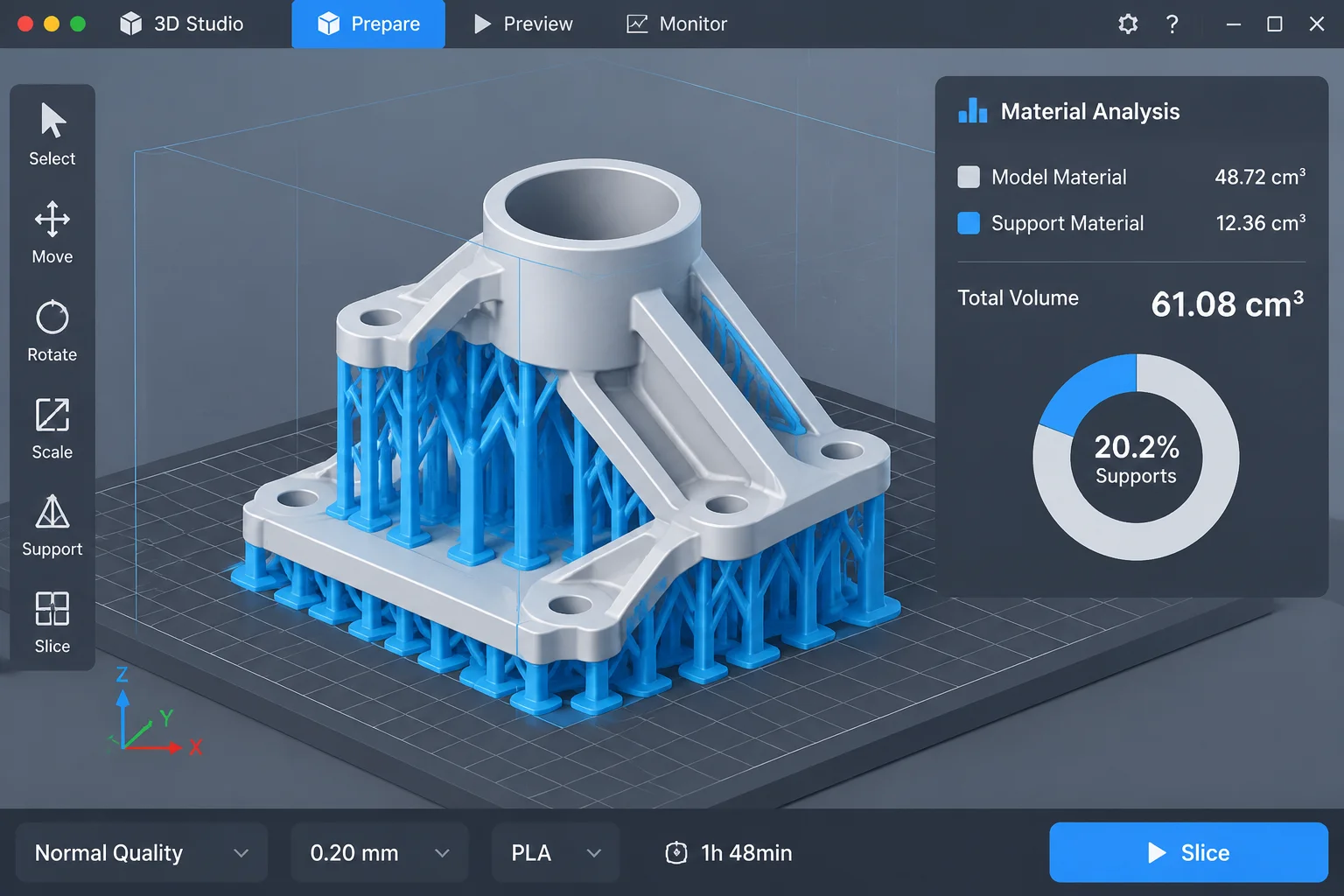
Densely packed lattices require incremental snip patterns to prevent mechanical shock from tearing part flesh.

  • High-density scaffolds increase manual snip cycles by approximately forty percent compared to sparse arrays.
  • Internal cavity lattices require specialized needle-nose flush pliers, slowing bench throughput.

Model Baseline Specifications

Average Snip Rate 18 to 26 contact points per minute
Technician Benchmark $28.00 per hour median loaded bench rate
Thermal Soak Benefit 35 percent reduction in detachment resistance
Surface Abrasion Baseline 45 seconds per square centimeter

Access Full Parameter Sheet

Submit your facility details to receive the multi-operator bench calculator workbook, including batch time variance curves and tooling evaluation tables.

Post-Processing Labor Questions

Systematic Workflow Audit

Minimize Bench Labor with Smart Slicing

Discover orientation methodologies that eliminate unnecessary supports and slash post-processing bench hours across SLA production runs.