Lychee Slicer Version Eight Auto-Orientation Analysis
Reviewing the new engine and features released in September 2026.
Naomi NagataOctober 22, 20268 Min Read
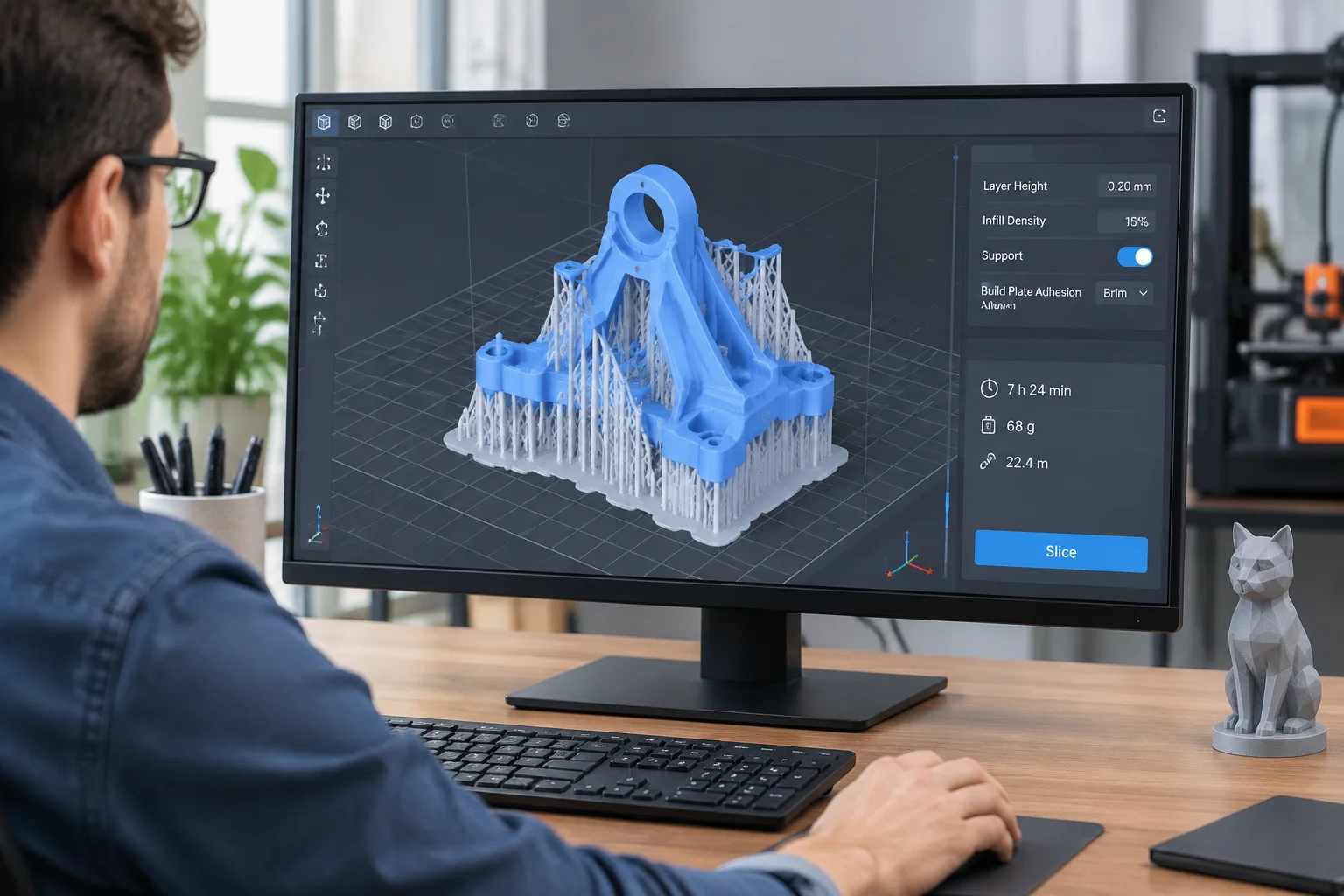
Automated orientation vector inspection in Lychee Slicer Version Eight demonstrating cross-sectional delta minimization.
01
Algorithmic Mechanics & Layer Delta Analysis
Lychee Slicer Version Eight introduces a restructured orientation core designed to mitigate severe cross-sectional changes across subsequent slice layers. In photopolymer vat printing, abrupt expansions in surface area generate sudden spikes in separation tension between the cured resin and the vat release membrane. The new engine evaluates the continuous layer area profile, rotating CAD geometry to achieve gradual geometric expansion rather than abrupt plateaus.
During automated testing passes across mechanical geometries, the solver dynamically samples orientation increments along three rotational axes. The software correlates potential angles against an internal database of peel force calculations. Instead of merely minimizing total model height or overall support volume, the updated algorithm prioritizes layer-to-layer area continuity, significantly diminishing the risk of layer delamination and mechanical banding.
Optimizing orientation solely for build height often maximizes peel force spikes; smoothing the cross-sectional area curve is far more critical for structural reliability.
A major advancement within this release cycle is the explicit awareness of protected surface facets during automated rotation calculations. When orientation routines execute, the engine actively penalizes angles that force heavy support contact onto designated cosmetic faces or precision mating surfaces. The calculation pipeline preserves designated functional tolerances while automatically discovering self-supporting orientations.
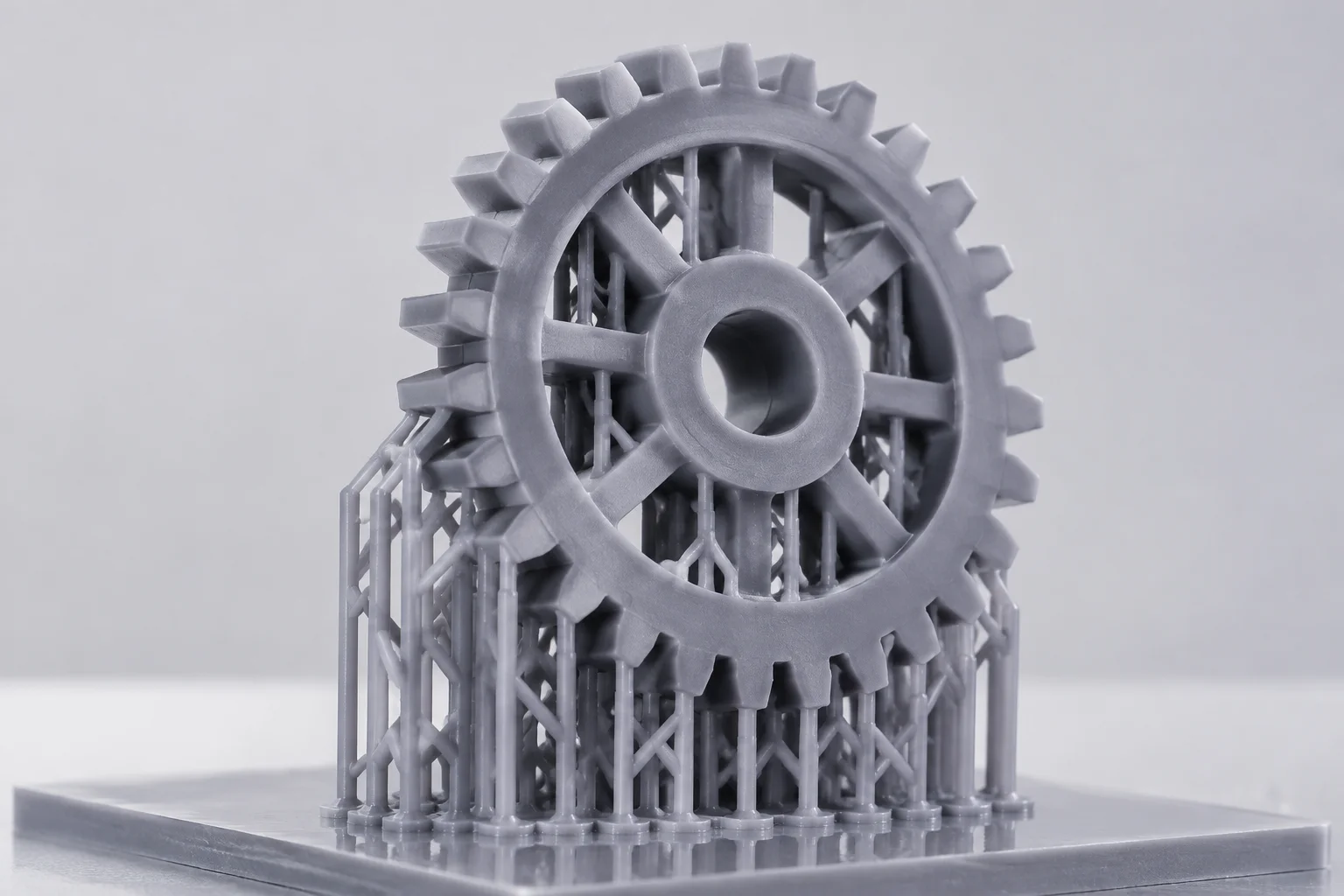
Selective surface weighting actively deflects support contact nodes away from critical functional faces.
Voxel-based suction cup detection highlights enclosed concave chambers prior to support placement.
03
Peel Force Attenuation & Rotation Benchmarks
Empirical testing across industrial bracket designs and organic test geometries indicates that Version Eight consistently converges on diagonal orientations ranging between twenty-eight and forty-two degrees. By avoiding completely flat or purely vertical orientations, the engine maintains moderate peel suction across the entire vertical stroke, stabilizing tension across standard rigid photopolymer formulations.
Comparing these automated results against expert manual orientations reveals an eight-to-ten percent variance in overall support count. While experienced operators still demonstrate superior foresight in positioning drain orifices for viscous materials, the Version Eight algorithm reliably delivers production-ready starting baselines that reduce manual setup intervals across repetitive digital manufacturing workflows.
04
Frequently Asked Questions
The algorithm slices the rotated mesh at standard intervals to evaluate layer surface area and perimeter changes. Orientations that exhibit sudden spikes in layer surface area are penalized, favoring rotations with smooth, gradual area transitions.
Yes, operators can select priority faces and assign surface protection rules. The auto-orientation solver automatically weights candidate rotations to keep support contact points off designated priority areas.
No, the orientation solver detects suction cups and tilts the model to encourage natural drainage, but hollowed models still require explicit drainage perforations placed via the hollowing toolset.
Keywords:Lychee SlicerAuto-OrientationPeel Force
Engineering Calculators
Analyze Support Footprint & Defect Probabilities
Access our interactive risk assessment tools to calculate peel tension, resin volume overhead, and surface defect probabilities.