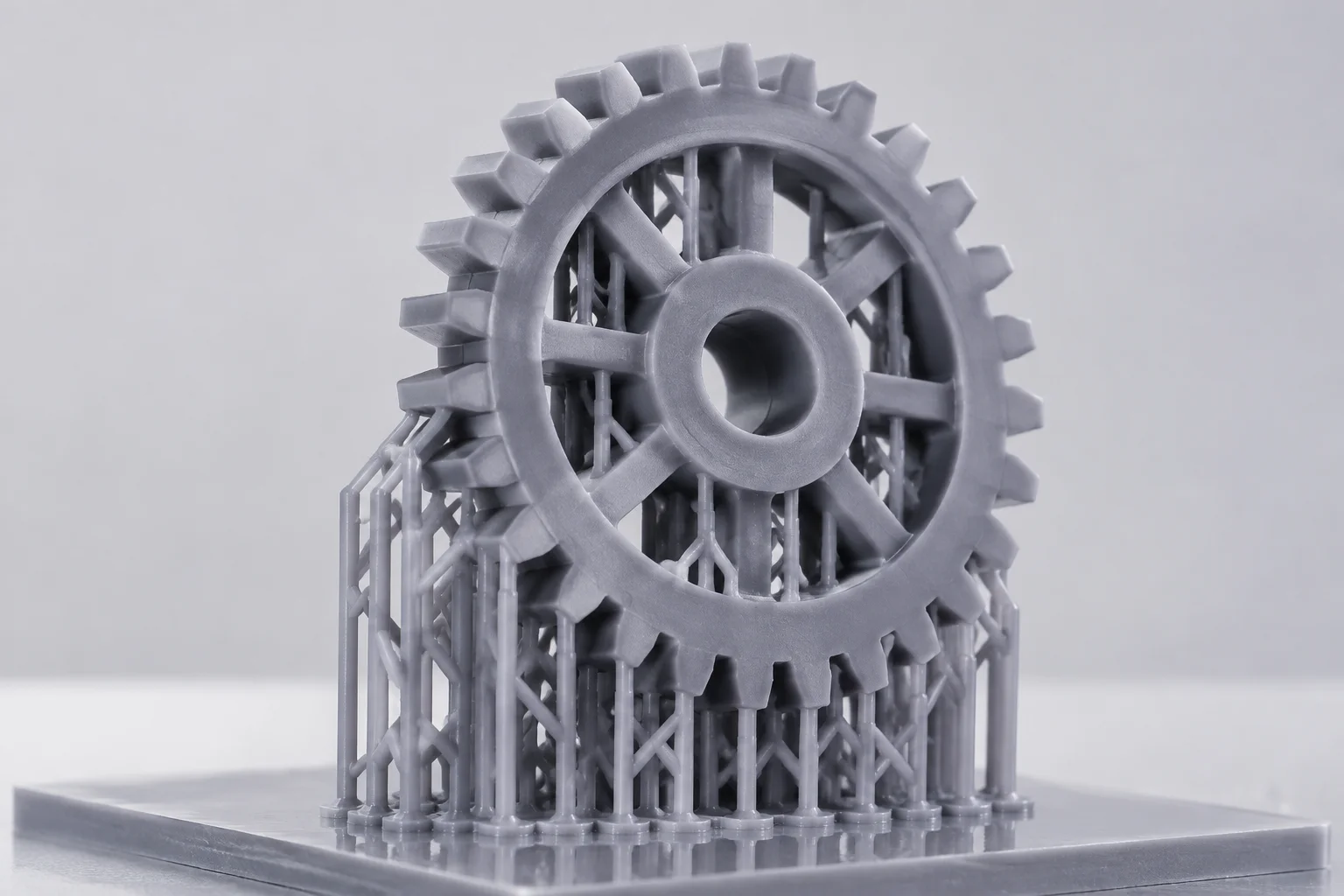
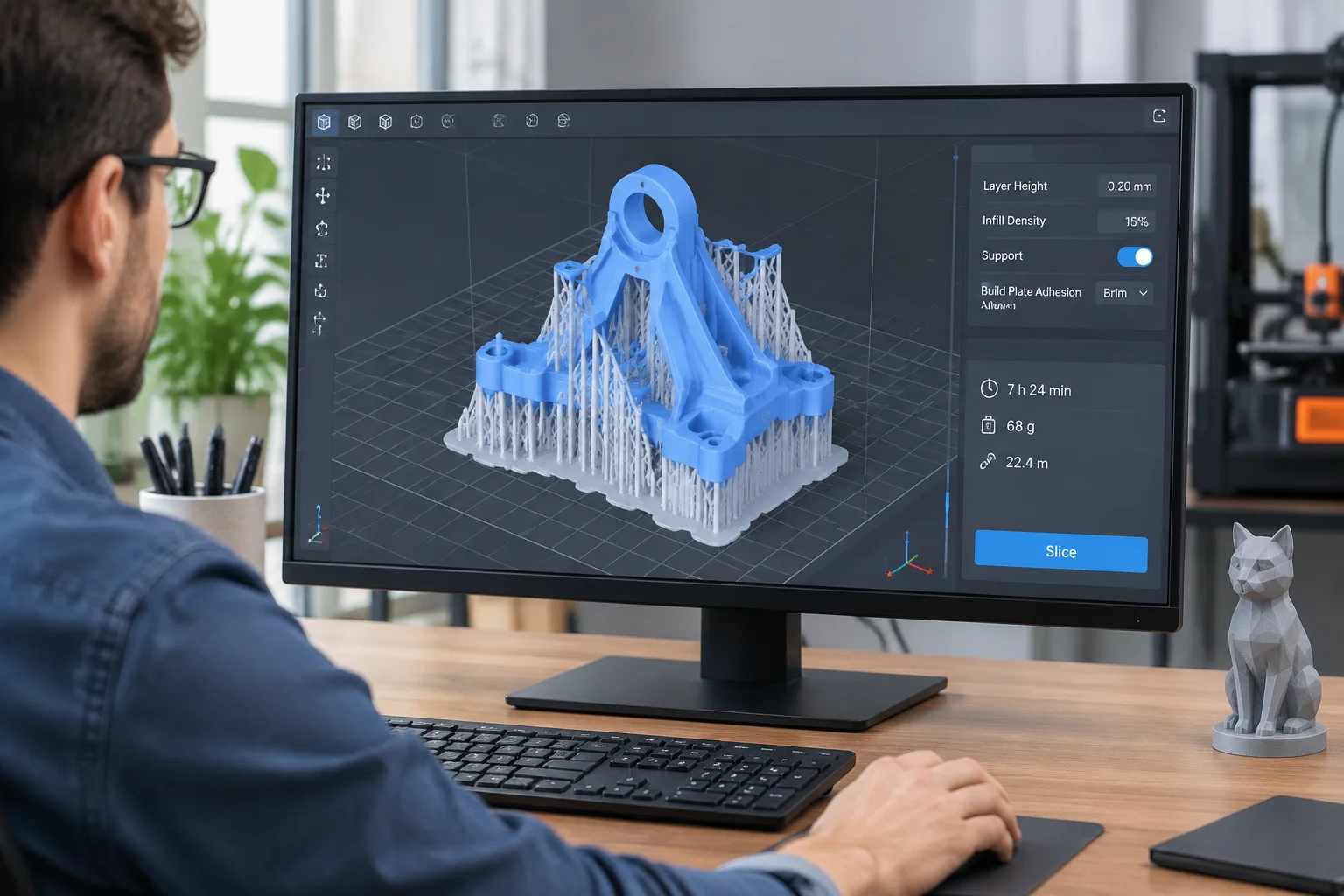
How version 3.64.2 accelerates structural parameter changes across multi-million polygon meshes and dense support architectures.
Amos Burton2026-10-187 min read
Spatial bounding volume hierarchy caching during iterative support scaffold recalculation.
01
Pipeline Modernization in Version 3.64.2
Iterative support scaffold configuration represents a primary friction point in SLA build preparation. Whenever an engineer alters touchpoint diameter or adjusts base raft height, the slicing suite executes geometric intersection queries against every surface triangle. In versions prior to 3.64.2, adjusting a single density parameter triggered a complete teardown and re-computation of the support mesh tree, creating lengthy pauses on high-density CAD models.
The release of version 3.64.2 restructures this calculation pipeline by implementing incremental spatial bounding volume hierarchies. The computational core now isolates local scaffold coordinates from static raft structures. Changing touchpoint sizes across specific overhang clusters recalculates only localized contact junctions, bypassing full collision re-evaluations across the underlying part geometry.
Isolating point recalculations from static mesh nodes prevents repetitive ray traversal, slashing latency on multi-million polygon production setups.
— Amos Burton, Technical Lead
02
Benchmark Metrics Across Complex Geometries
Our laboratory benchmark evaluated three distinct engineering geometries: a thin-walled electronic housing, an organic dental arch with dense contact arrays, and a complex fluid manifold comprising 4.8 million surface polygons. We recorded elapsed regeneration intervals across identical hardware profiles running 16-core workstation processors:
High-density manifold generation dropped from 18.4 seconds down to 5.2 seconds on cold recalculation runs.
Fine touchpoint adjustments between 0.30 mm and 0.50 mm responded in 420 milliseconds without thread stalls.
Analyzing CPU thread distribution reveals significant architectural shifts in how thread pools handle geometry tasks. Earlier software architectures scheduled collision math through primary UI worker queues, generating visible cursor delays and sporadic system unresponsiveness during intensive scaffold revisions.
The updated dispatch mechanism partitions ray intersection calculations across available hardware logical cores simultaneously. Memory management routines constrain memory allocations beneath four gigabytes even on exceptionally dense build volumes. Engineers preparing batch arrays across large build plates experience consistent UI responsiveness throughout orientation shifts.
04
Technical Questions & Answers
No dimensional fidelity is lost. Acceleration is achieved purely through spatial caching and multi-threaded intersection math, leaving the final sliced geometry and contact tip diameters identical to previous mathematical models.
Processors offering high single-core turbo frequencies paired with at least eight physical cores yield the highest performance gains. Fast NVMe storage and DDR5 memory bandwidth also assist spatial index parsing.
Initial spatial bounding volume hierarchies must be constructed during the first model load. Subsequent support alterations leverage this cached data structure, ensuring downstream revisions remain rapid.