01
Defining Critical Boundaries on Digital Arches
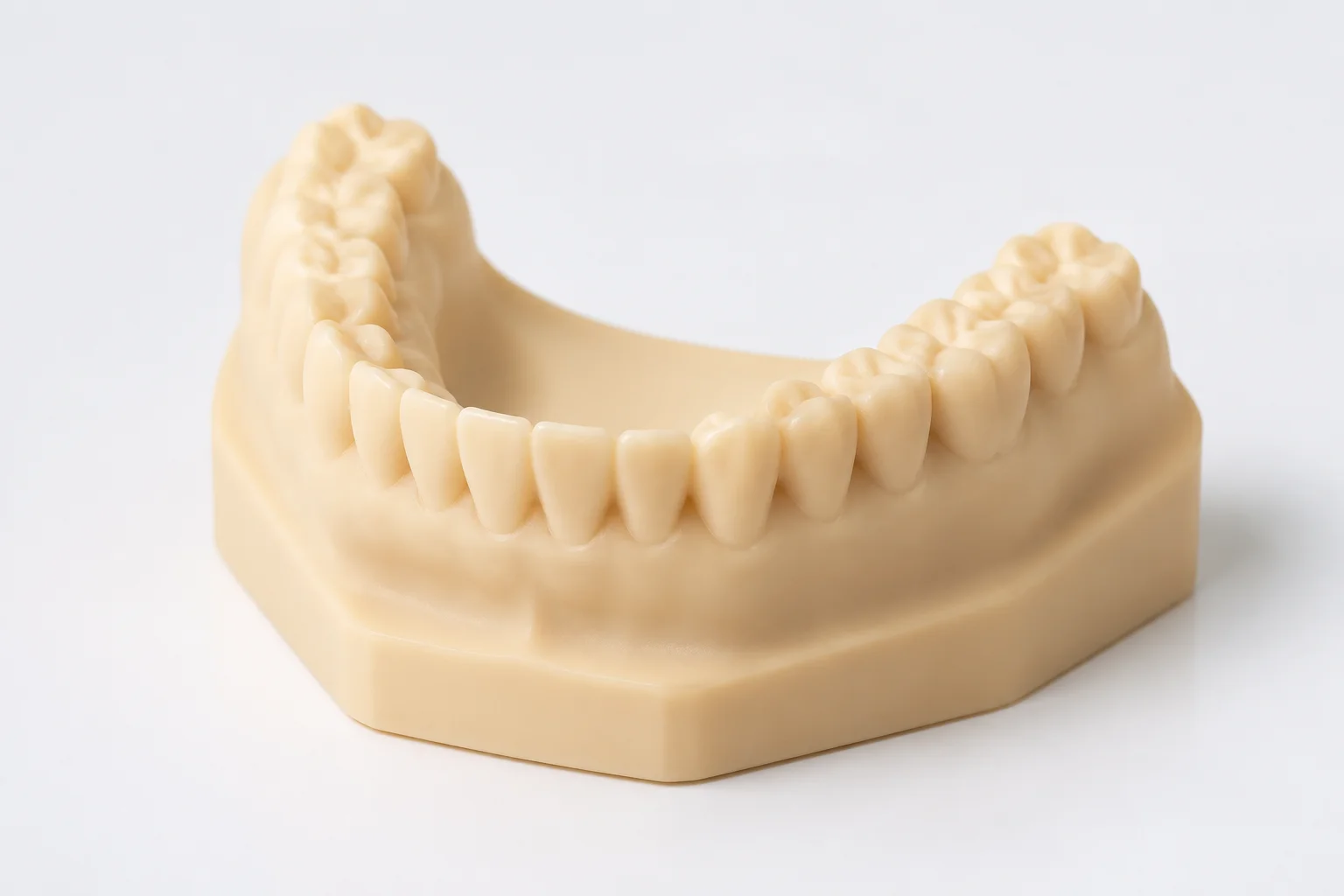
Dental models demand extreme dimensional fidelity along prep margins, interproximal contacts, and internal die pockets. Placing support tips directly on an emergence profile or an occlusal contact ledge compromises seating for secondary copings and aligners. Surface priority assigns virtual keep-out boundaries across delicate regions before automatic generation algorithms calculate strut paths.
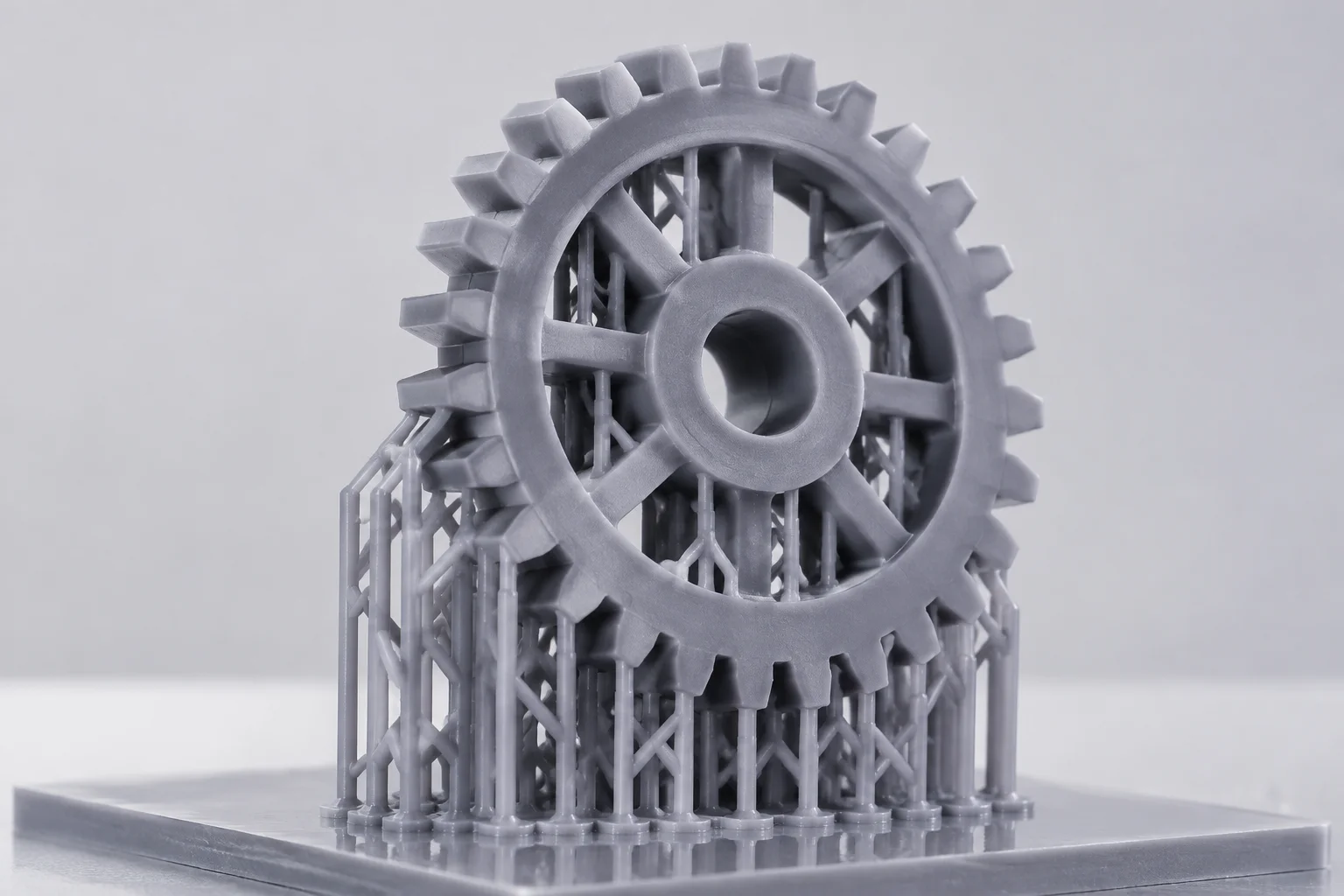
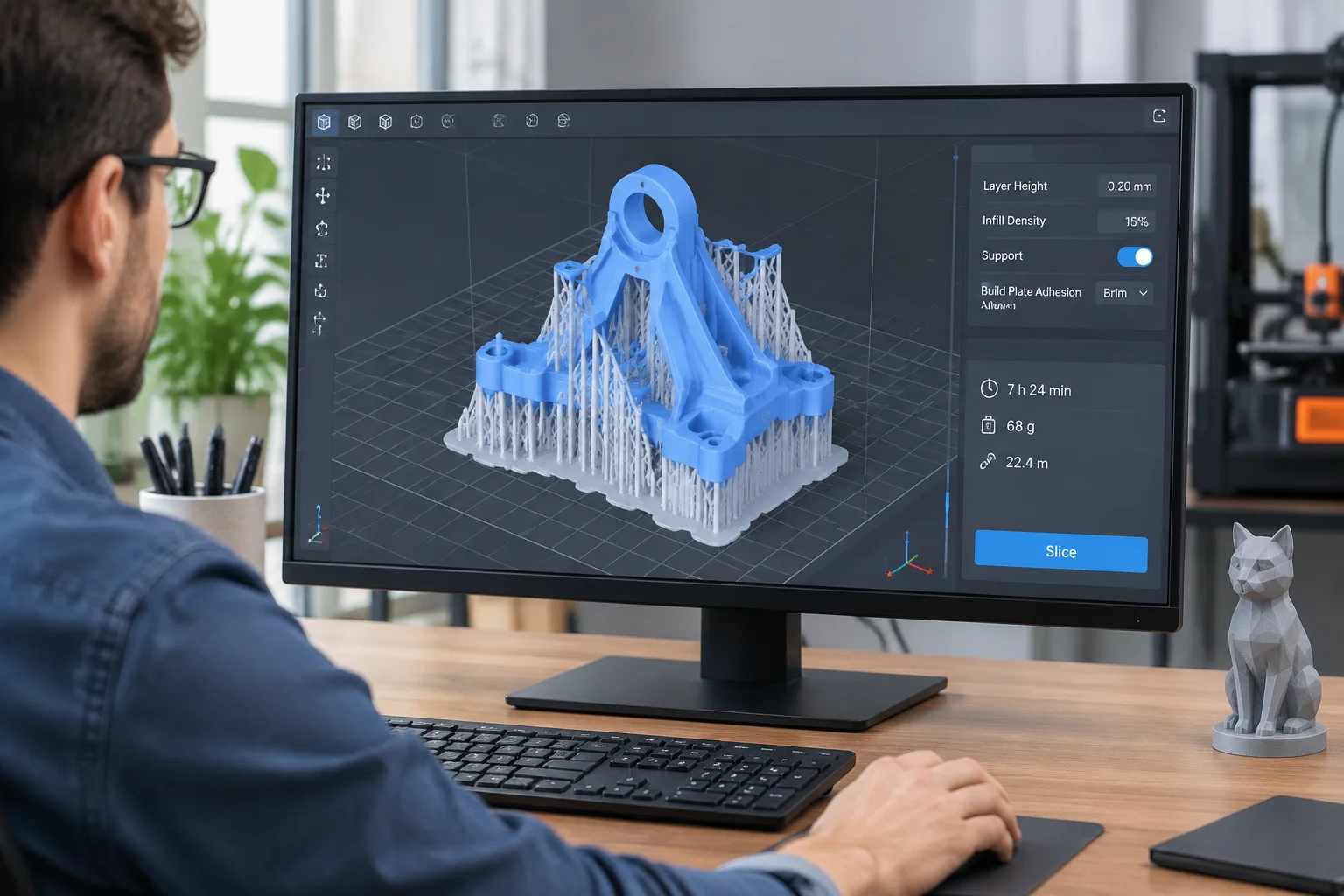
Slicing software evaluates overhang angles via surface normal vectors, yet automated routines lack clinical awareness. Without clear priority constraints, default algorithms routinely anchor supports directly to the knife-edge finish lines of prepared abutments. Operators should establish hierarchical rules where the base plate and palatal shelf absorb all mechanical pull forces, keeping crown interface contours pristine.
02
Angulation Protocols and Strut Relocation
Angling the dental arch between 25 and 45 degrees relative to the build plate shifts downward overhang vectors toward non-critical anatomy. This orientation allows peel tension to distribute along sturdy base walls while holding delicate occlusal features away from support attachment grids:
- Tilt the arch posterior-down at a 30-degree incline to position support contacts exclusively along the underside base perimeter.
- Constrain touchpoint diameters to a refined 0.30 mm to 0.35 mm range when bracing lingual stabilization ridges.
- Apply virtual exclusion paint across all interproximal contacts and emergence margins before initiating structural calculations.
03
Peel Tension Mitigation and Post-Processing
During vat separation, hydrostatic suction acts against the entire model footprint. Hollowing dental arches reduces the total resin cross-section, yet hollow perimeters can deflect if wall thickness drops below 2.5 mm. Priority assignment enforces dense structural anchoring along the thick base boundary, shielding thin tooth preparations from peeling strain.
Post-wash curing also relies heavily on clean margins. When support touchpoints stay away from critical surfaces, light distribution during UV post-curing remains completely uniform. Technicians bypass micro-motor burs and abrasive discs, preserving true intraoral scan geometry directly into final appliance seating.
Engineering Utility
Surface Risk & Defect Matrix
Assess defect probabilities across angled planes and set contact parameters before print execution.
Launch Tool