Case Evaluation #02

Dental Arch Flat versus Angled

Evaluating cross-arch dimensional accuracy, peel separation loads, and post-cure finishing requirements across horizontal build-plate and angled elevated setups.

November 18, 2026 Orthodontic & Prosthodontic Workflows 6 min read

Platform Alignment Dynamics

Slicer profile trade-offs between horizontal base printing and inclined support scaffolding.

Material: Model Resin Evaluated Trajectories: 0° Flush vs 30° Posterior Pitch Geometric Complexity: High Lab Accuracy: Verified (±35 µm)

Dental arch fabrication demands exacting tolerances across anterior-posterior spans and occlusal contact points. Positioning the dental model base directly flat on the build platform eliminates scaffolding contacts across clinical anatomy, lowering total cycle time. However, this flush orientation produces severe initial peel suction loads across wide surface planes, creating risks of tray detachment or base perimeter distortion.

Tilting the arch at approximately thirty degrees posteriorly with the heels facing the platform introduces an incremental peeling gradient. This angle positions support scaffolding exclusively along non-critical base borders and posterior heel planes. While elevating the model increases z-height and total printing duration, it reliably protects inter-molar dimensions and prevents gingival margin distortion.
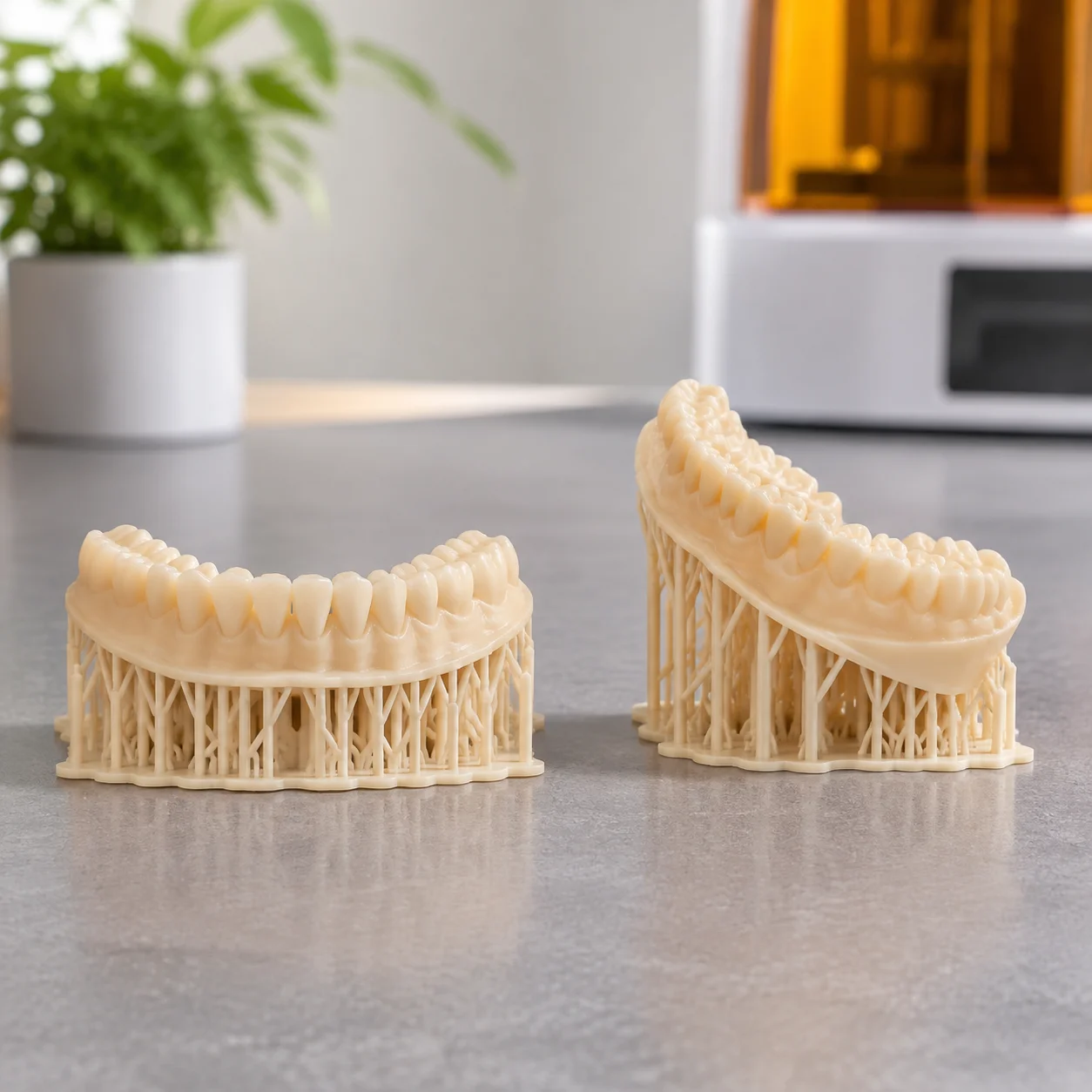
Peeling Dynamics & Scaffolding

Cross-sectional comparison between planar peel suction and gradual layer detachment.

Dental Arch Flat versus Angled
SLA Comparison Benchmark

The flat model configuration contacts the vat film across broad surface boundaries, elevating separation pull loads. In contrast, the thirty-degree angled profile creates a smooth progressive peeling motion. Sacrificial support tips terminate cleanly along the peripheral model base, keeping occlusal surfaces and interproximal contact zones completely blemish-free.

Metric Comparison & Standards

Laboratory measurements comparing cross-arch accuracy, peel resistance, and post-processing intervals.

Inter-Molar Span Tolerance ±32 µm (Angled) / ±68 µm (Flat)
Peak Separation Pull Load 14.2 N (Angled) vs 41.8 N (Flat)
Print Cycle (50 µm Layer Height) 48 min (Flat) vs 112 min (Angled)
Anatomy Contact Marks Zero on Clinical Margins

Alignment Protocol Insights

Achieving clinical fit requires careful control of peel pull loads and resin flow. When preparing dental models for elevated printing, technicians should adjust contact point densities to maintain stability during detachment.

  • Orient the anterior teeth upward at a 25 to 35-degree pitch to keep delicate incisal edges clear of support touches.
  • Position heavier 0.6 mm supports exclusively on the posterior base heels and lighter 0.35 mm contacts along lingual margins.
  • Incorporate hollow drain passages along the base plate to prevent trapped resin pockets from creating suction cups.

Setup Inquiries & Diagnostics

Practical considerations regarding print speed, dimensional consistency, and finishing techniques.

Model Orientation Review

Submit your parameters to evaluate optimal tilt angles, material viscosities, and support settings.

Technical Parameter Review

Review specific dental model configurations, resin characteristics, and tolerance specifications directly with our engineering desk.

Related Orientation Benchmarks

Comparative case studies on mechanical brackets, figurines, and enclosure geometries.

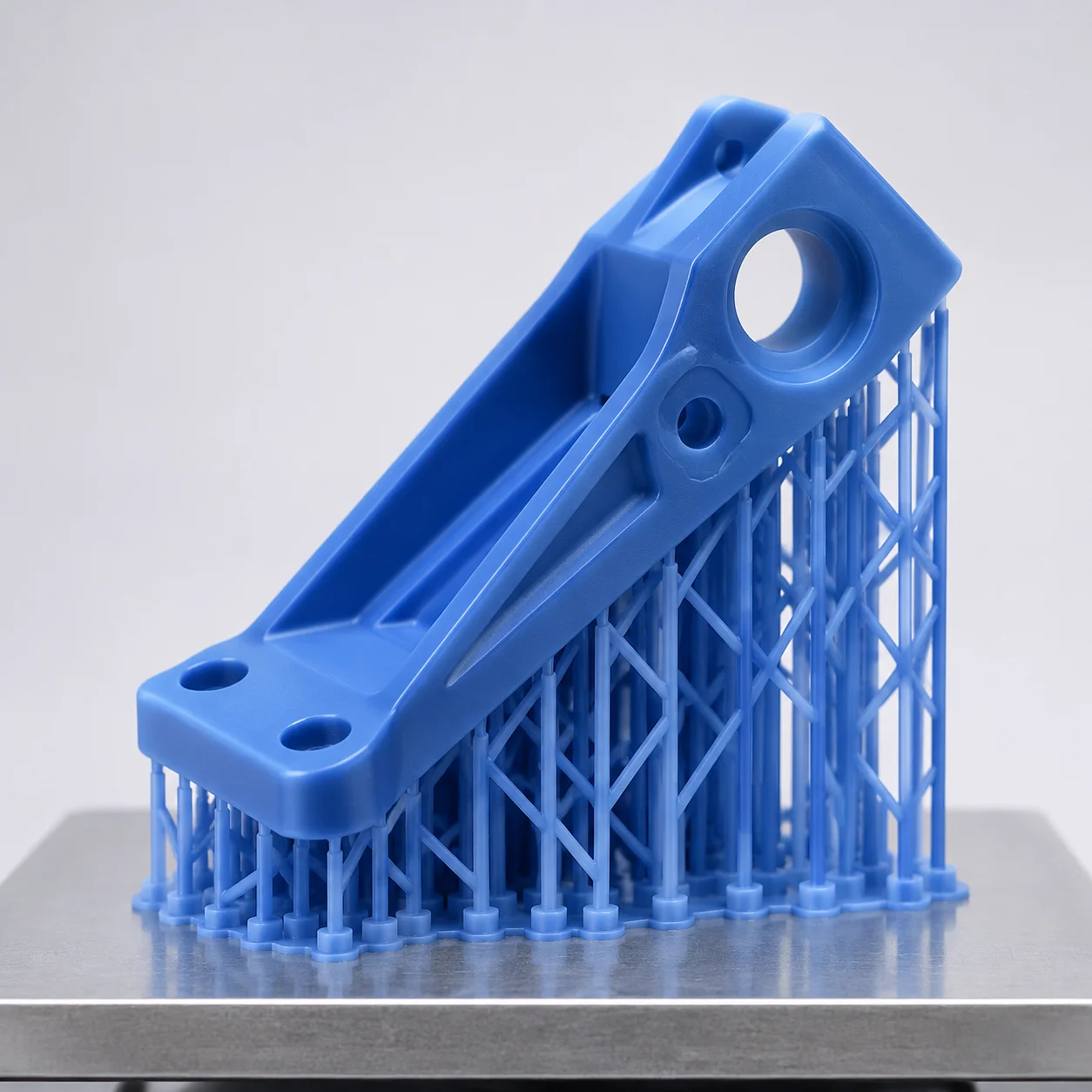
Mechanical Bracket Forty Five Degree Tilt Tough Resin

Mechanical Bracket Forty Five Degree Tilt

Structural bracket orientation balancing peel peeling loads and directional rigidity along functional holes.

Medium Complexity
View Setup
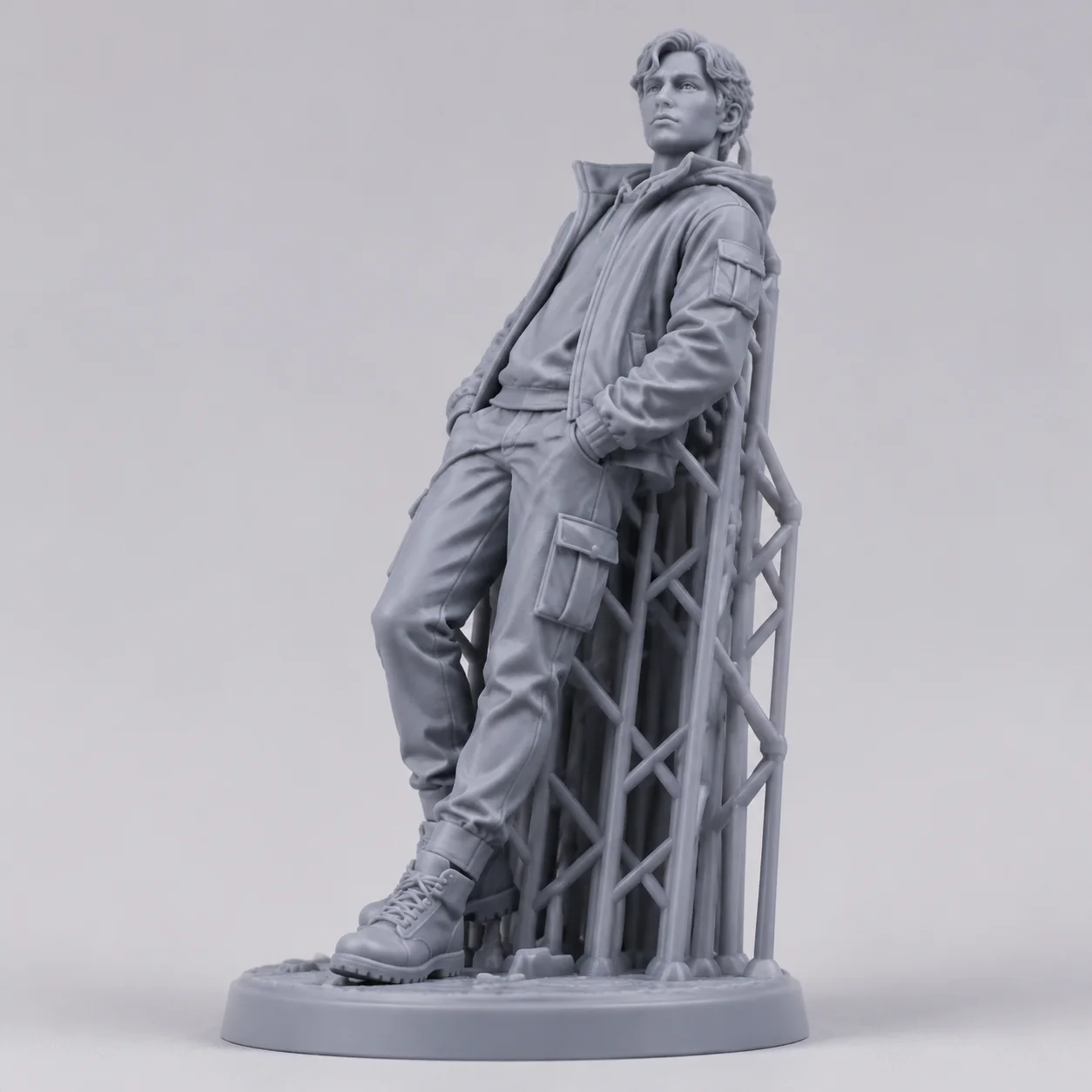
Miniature Figure Face Up Standard Grey

Miniature Figure Face Up

Backward tilt strategies designed to place support touchpoints on back surfaces while leaving face details immaculate.

High Complexity
View Setup
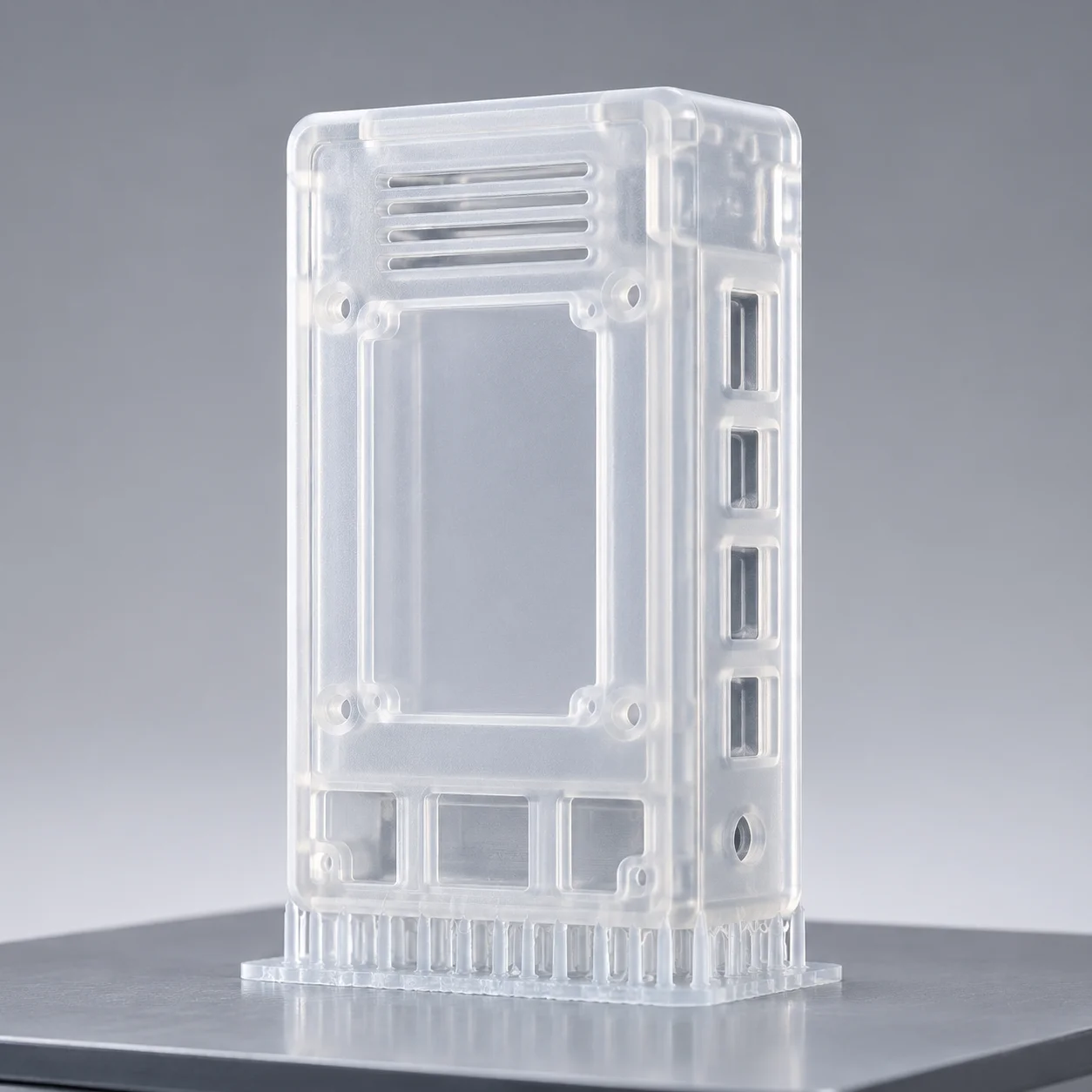
Enclosure Box Vertical Orientation Clear Resin

Enclosure Box Vertical Orientation

Space-saving vertical setups that reduce cross-sectional surface area and eliminate expansive planar suction forces.

Low Complexity
View Setup