
 Model Resin
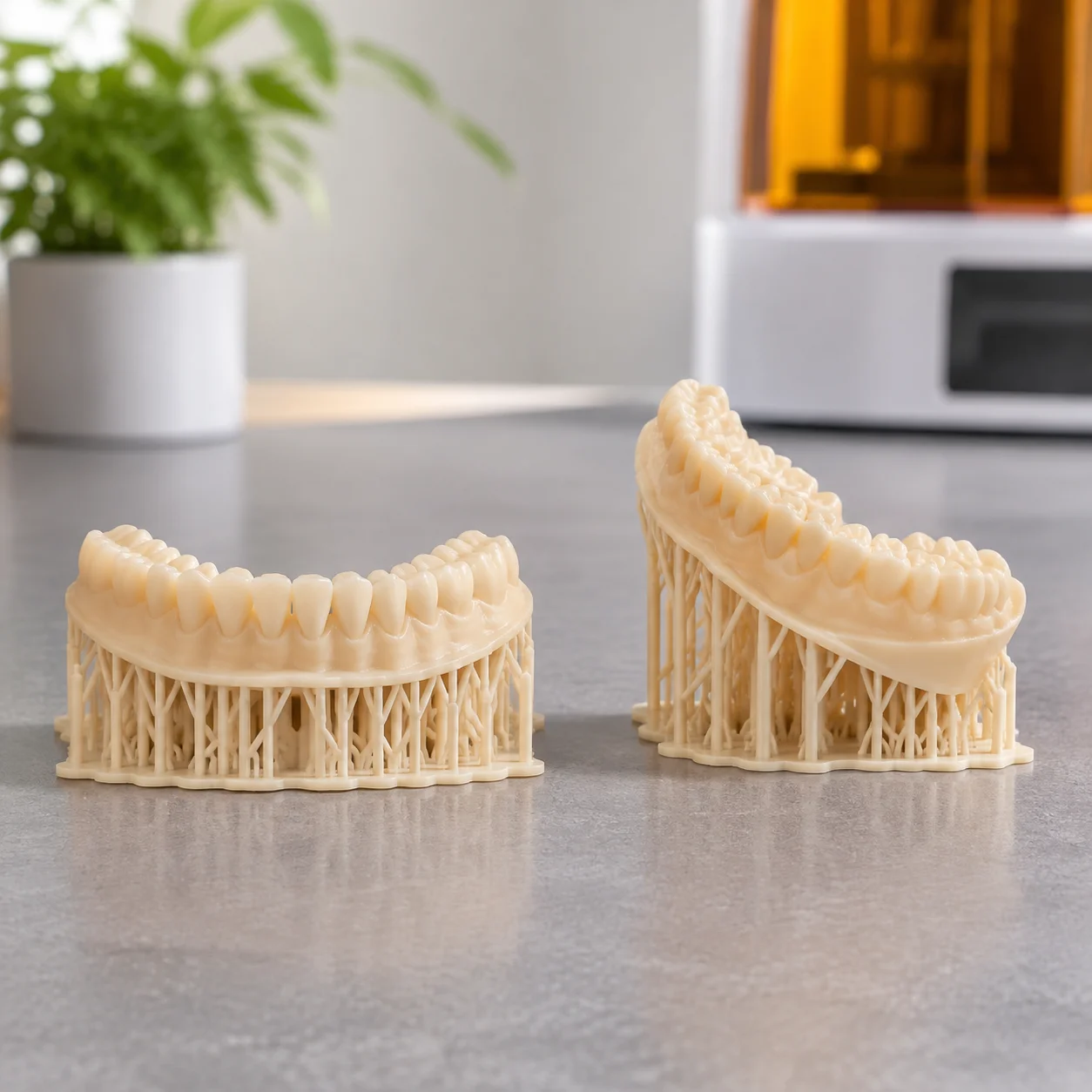
Dental Arch Flat versus Angled
Analyzing the differences in support placement and accuracy when printing dental models.
High Complexity
View Setup
Strategic orientation and microscopic support generation for castable wax resins, ensuring flawless outer band geometry without compromising print reliability.
Understanding the material constraints and orientation angles for delicate castable wax jewelry models.
Printing jewelry rings requires a delicate balance between structural integrity and surface preservation. When working with castable wax resins, the material behaves quite differently than standard prototyping photopolymers. It exhibits noticeably higher viscosity and lower green strength, meaning that the orientation must actively distribute peel forces across the strongest parts of the geometry. Rings are typically angled between 30 and 45 degrees relative to the build platform. This specific tilt minimizes the cross-sectional area at any given layer, effectively reducing the suction cup effect during the resin separation phase.
The primary challenge involves managing the intricate details on the outer band, such as gemstone prongs, engravings, or fine milgrain textures. To protect these critical aesthetic design elements, operators must route all support structures exclusively to the inner shank and the bottom edge. By confining the touchpoints to areas that are easily sanded or resized post-casting, the jeweler drastically reduces manual finishing time and prevents accidental damage to the fragile wax features.
Visualizing the precise touchpoint locations on a high-fidelity ring model.
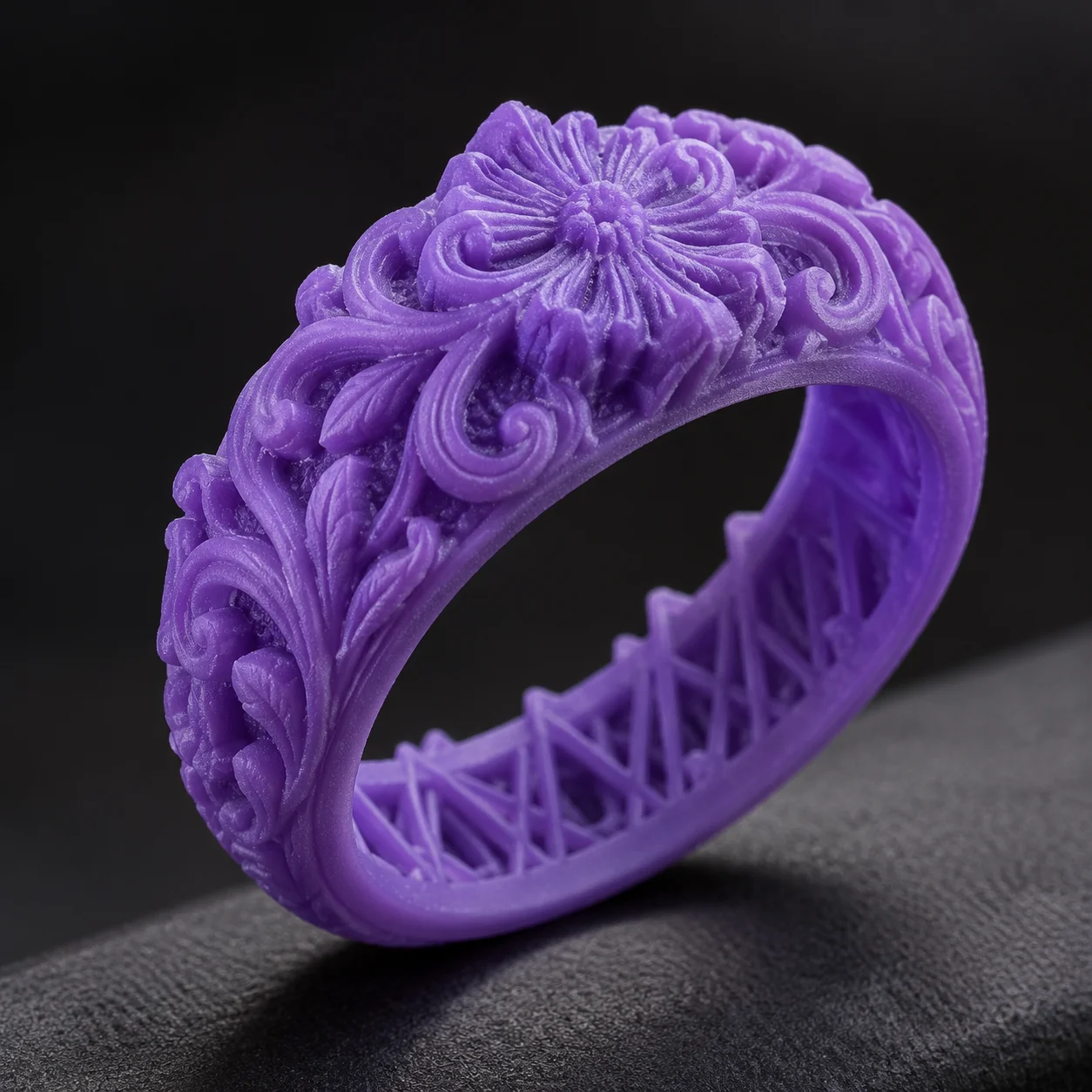
In this extreme close-up of the castable wax ring, you can clearly observe the microscopic support structures holding the delicate geometry. They form a dense, careful lattice that attaches solely to the internal diameter of the band. The supports taper to contact points as small as 0.20mm, allowing the cured resin to break away cleanly without tearing the underlying wax layer. Notice how the outer intricate textures and prong settings remain completely unobstructed, ensuring the final metal casting retains maximum fidelity from the digital file.
Evaluating the impact of micro-supports on overall print quality and post-processing efficiency.
Because wax resins tend to warp slightly before full UV post-curing, the support network must act as a rigid cradle. Placing supports densely along the inner curve prevents the circular band from becoming oval under its own weight or due to rapid shrinkage. The structural scaffolding holds the jewelry geometry in exact tension until the ring is fully cured, washed, and ready to be detached.
Common questions regarding the orientation of wax jewelry patterns.
Need expert assistance optimizing your jewelry print workflow?
Submit your digital ring file, and our specialists will analyze your support placements, identify potential failure zones, and recommend precise touchpoint modifications.
Explore alternative support methodologies for complex 3D printed components.
Model Resin
Analyzing the differences in support placement and accuracy when printing dental models.
 Standard Grey
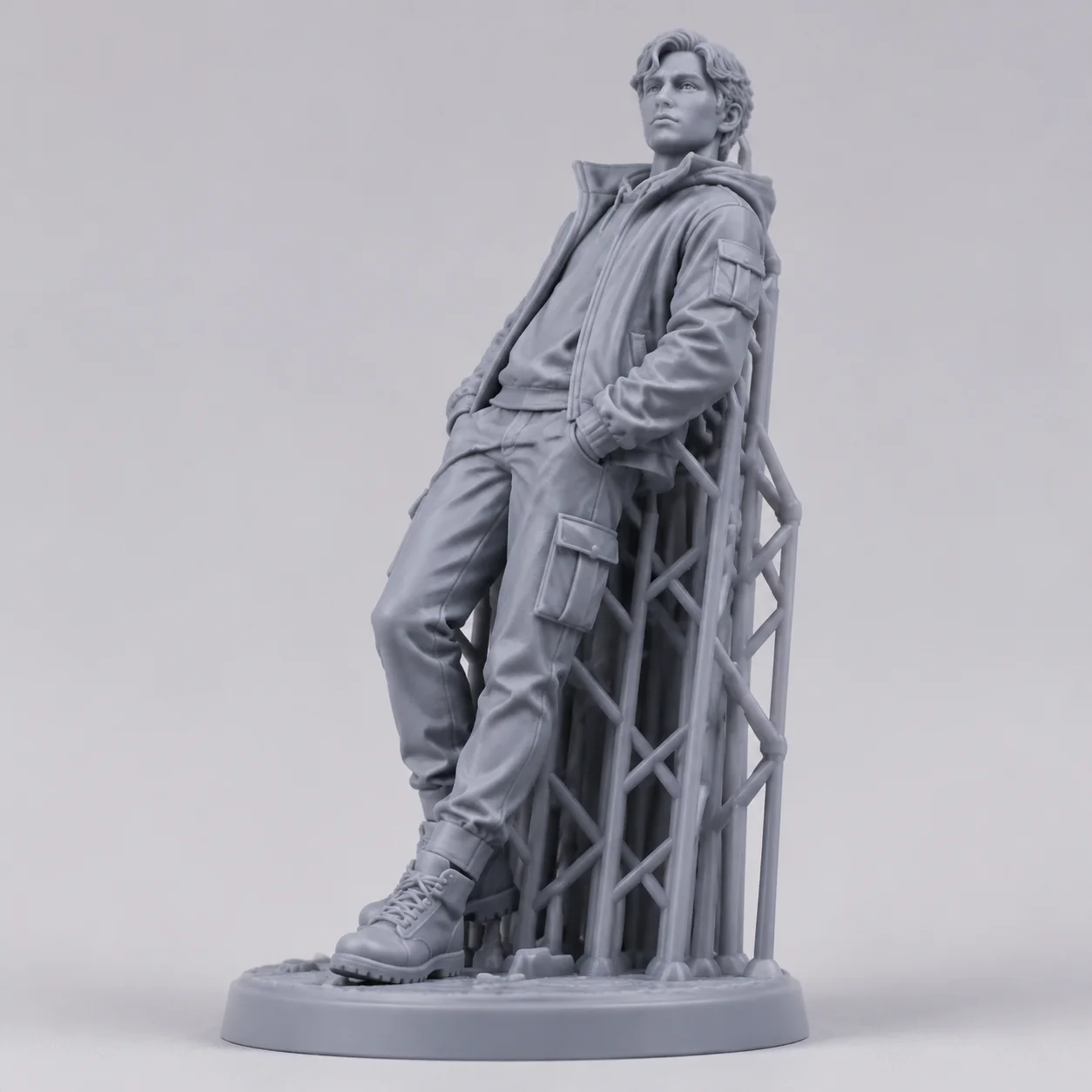
Tilting miniatures backwards to protect crucial facial details from support scarring.
 Clear Resin
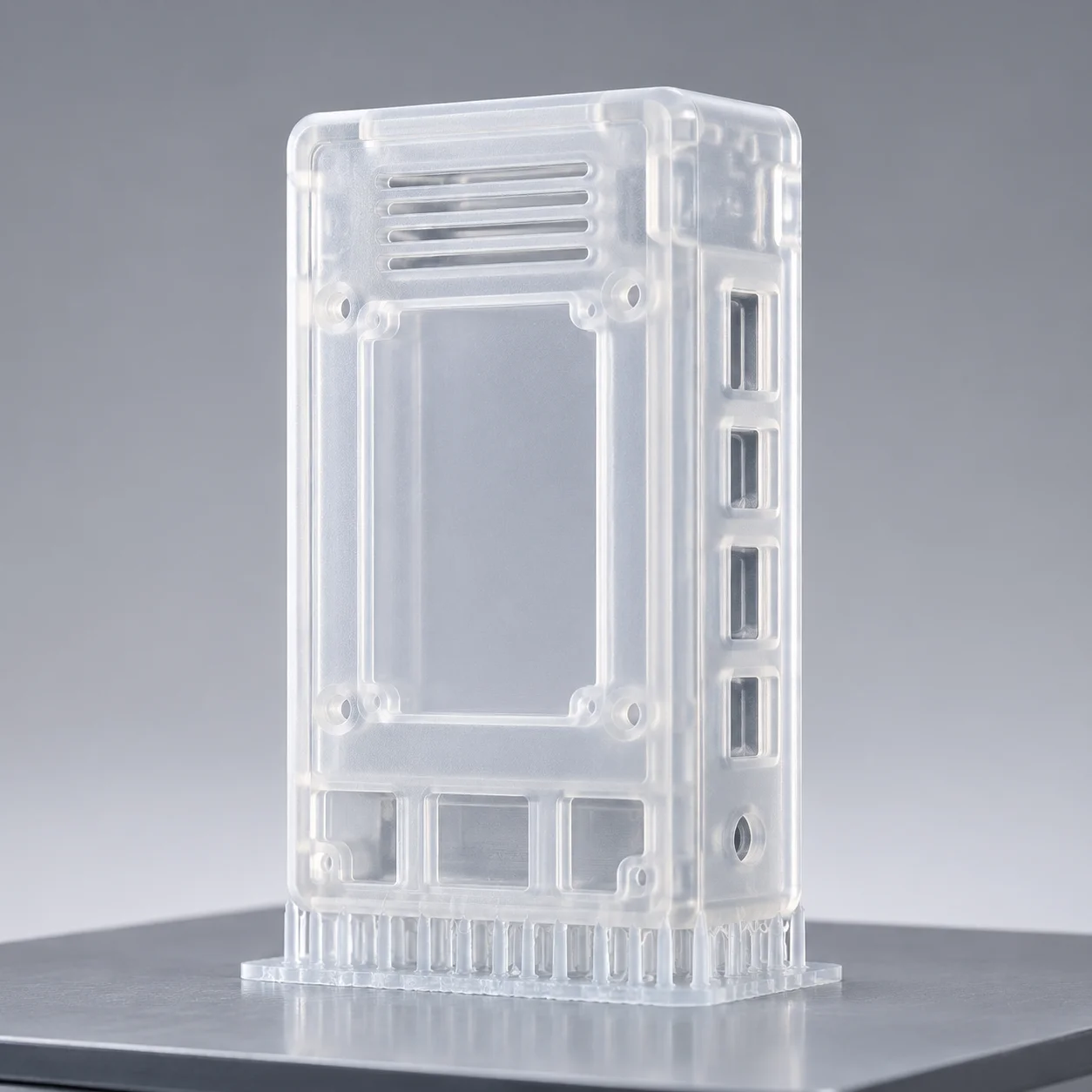
Orienting electronic enclosures vertically to optimize build volume and reduce footprint.