
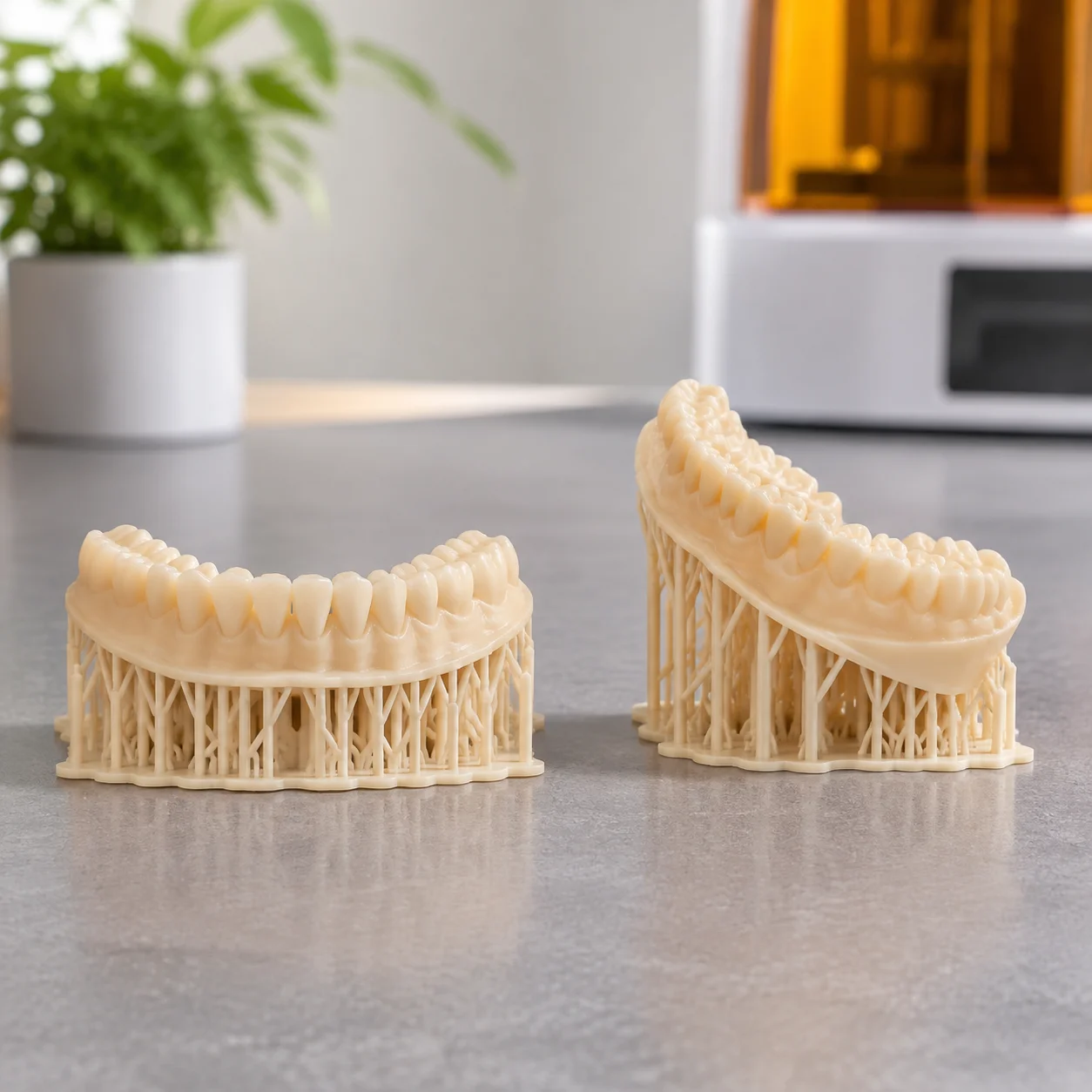
 Dental
 Arch Flat versus Angled
Two 3D printed dental arches, one flat and one angled, showing support differences and surface priorities.
High Complexity • Model Resin
View Setup
Advanced orientation and cross-bracing techniques to maintain dimensional accuracy and prevent warping in delicate, thin-walled SLA prints.
Key settings and material choices required for successfully executing thin structural walls without failure.
Printing parts with extremely thin walls presents a unique challenge in SLA 3D printing. During the peel process, thin walls are highly susceptible to deformation, tearing, or severe warping if not properly reinforced. To mitigate these risks, the model must be carefully angled and supported by an interconnected web of cross-bracing structures that lock the geometry in place.
Utilizing a high-modulus material like Rigid Resin is highly recommended for these applications. Its stiffness naturally resists the bending forces introduced during layer separation. However, even with stiff materials, proper support density and strategic placement remain critical to maintaining dimensional accuracy throughout the entire height of the print.
Visual breakdown of the cross-bracing support network designed to stabilize thin vertical geometries.
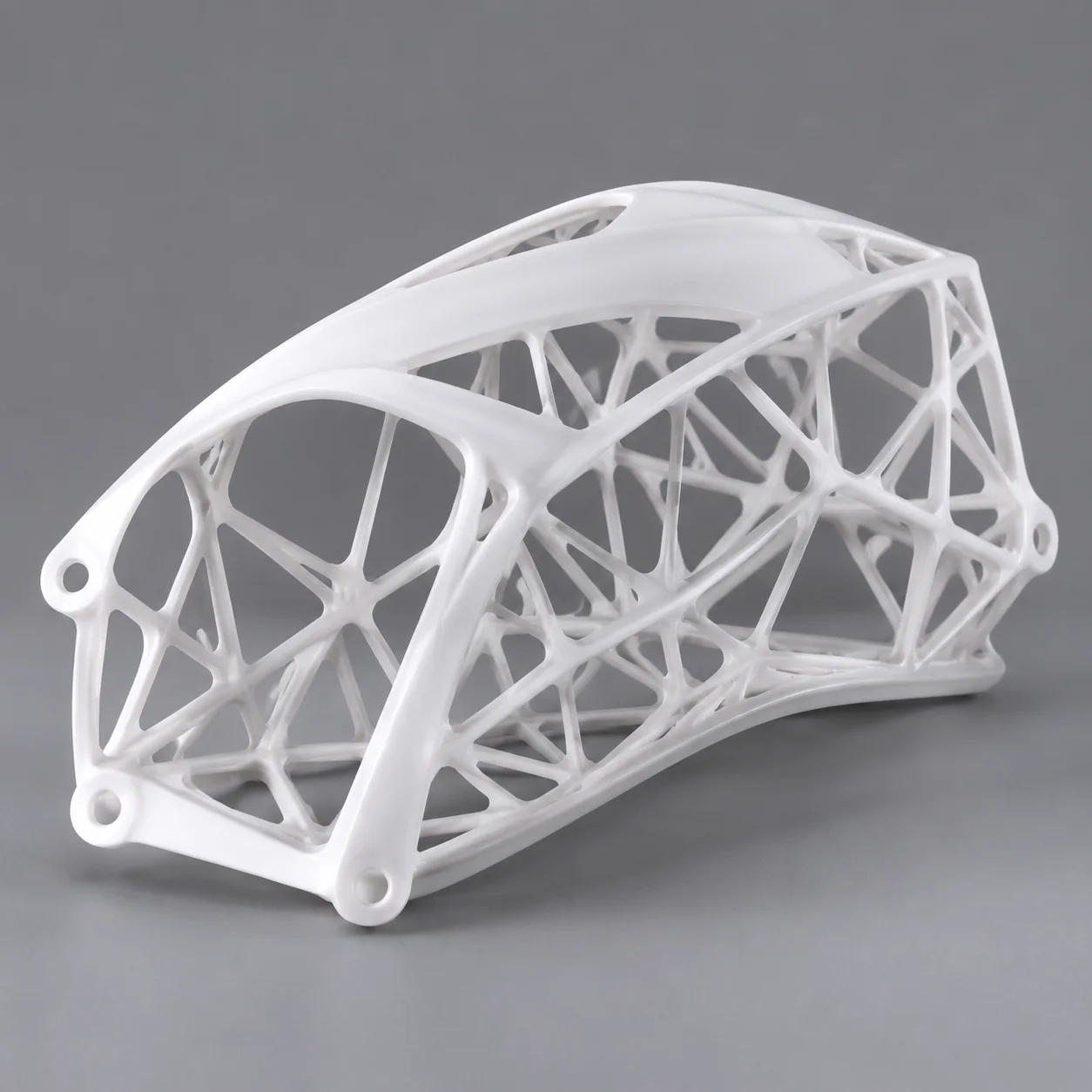
This technical layout illustrates the necessity of interconnected supports. Instead of relying on single, isolated pillars, the support system employs cross-bracing where diagonal trusses connect individual vertical supports. This creates a rigid structural lattice that effectively distributes the peel forces across a wider area, preventing the thin wall from flexing or snapping as the build platform rises. Notice how the contact points are evenly distributed along the leading edge, minimizing localized stress concentrations.
Evaluating the impact of cross-braced supports on surface finish and dimensional stability.
The primary objective when orienting thin-walled structures is to minimize the cross-sectional surface area for each layer while providing enough rigidity to withstand the separation from the resin tank. By angling the part at approximately 35 degrees, the peel force is gradually introduced rather than hitting the entire wall simultaneously.
Common troubleshooting queries regarding thin-wall support strategies.
Connect with our engineering team for personalized support strategies.
Submit your CAD files or describe your geometry, and our specialists will recommend the ideal material and support configuration for your specific application.
Explore more orientation studies from our gallery.
Dental Two 3D printed dental arches, one flat and one angled, showing support differences and surface priorities.
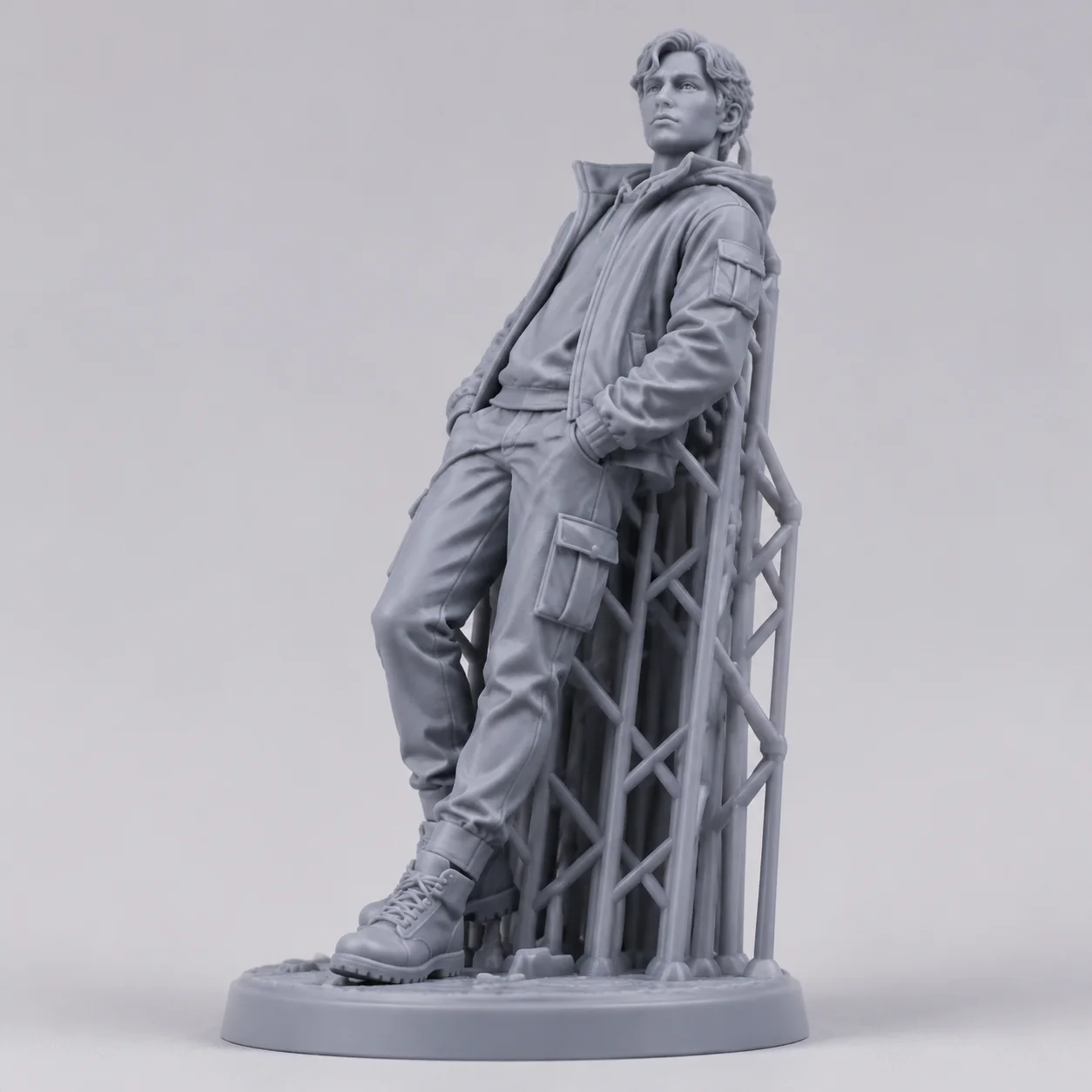 Miniatures
A 3D printed miniature figure tilted backwards to protect facial details from support scarring.
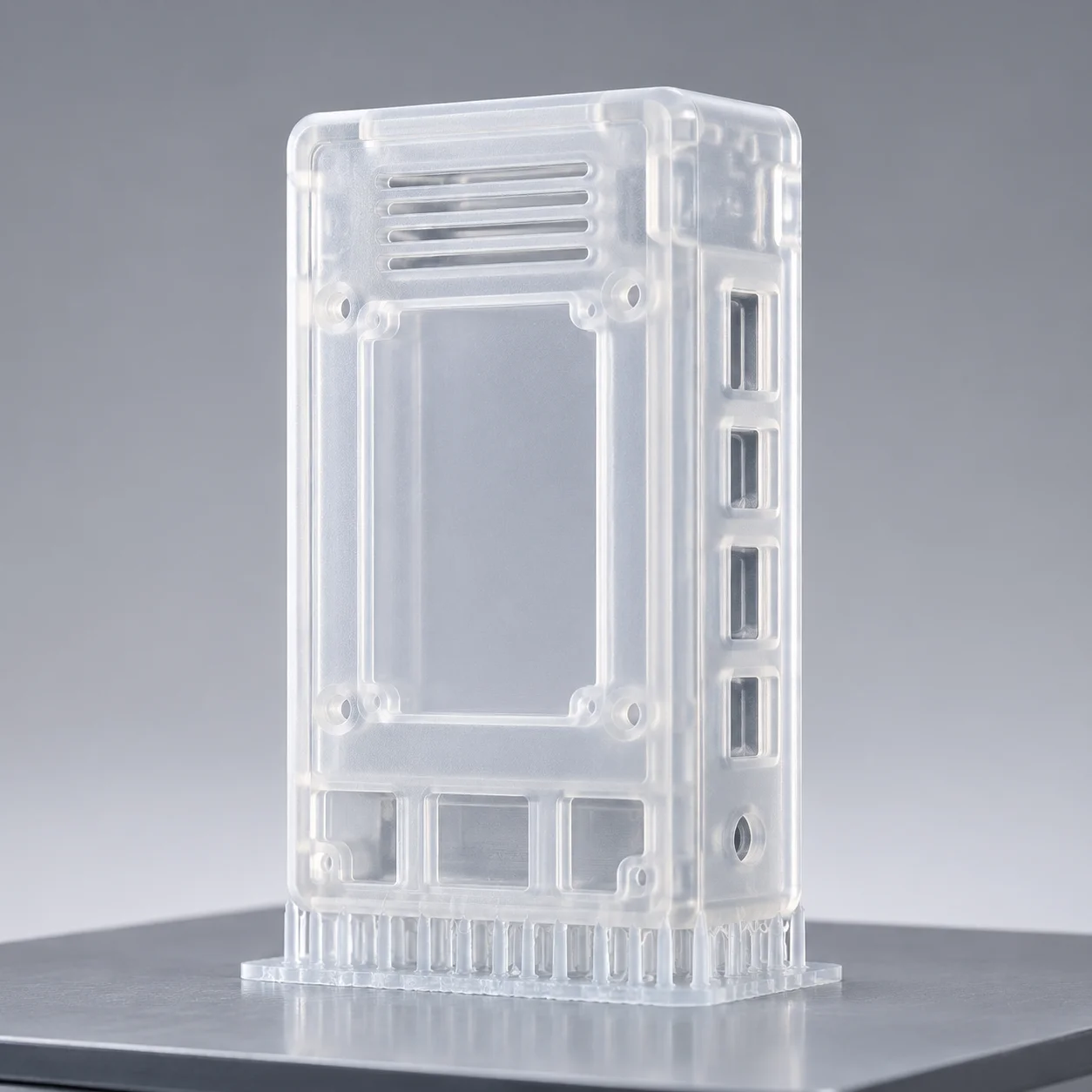 Engineering
A 3D printed electronic enclosure box oriented vertically to save space and minimize support footprint.